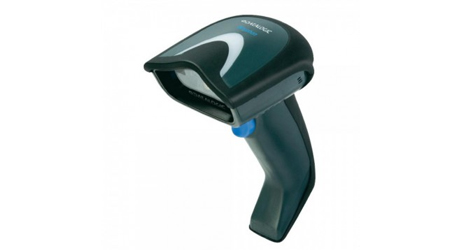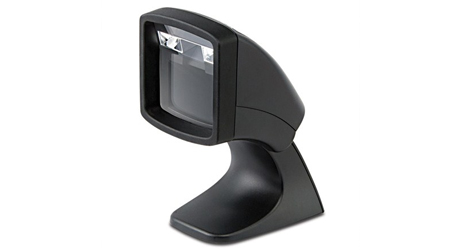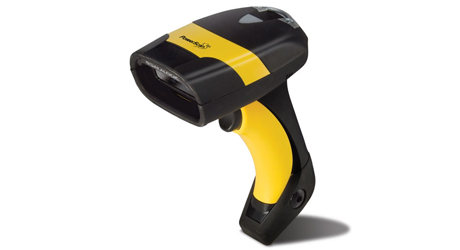
Barcode Trading Post features a wide selection of used Datalogic scanners. From the most recent technologies to legacy and discontinued products, BCTP offers used Datalogic scanners for any solution.
Whether the item you are seeking is carried in stock, or can be sourced through our wide network of partners, BCTP used Datalogic scanners are made to fit your budget. For customers upgrading from an older technology, BCTP will offer a trade-in on your older equipment, providing credit towards your purchase. In addition to trade-in options, BCTP will also purchase your used Datalogic scanners – turning idle assets into cash.
Our scanners are available in several conditions, from average condition to like new. Regardless of condition, all of our used Datalogic scanners are certified by our technical team to offer the same functionality as a new scanner. The testing process is guaranteed by a 30-day return period on all used Datalogic scanners.
To reach a Barcode Trading Post sales representative to create or upgrade your barcoding solution, please call us at: 1-888-613-7413. You may also contact a representative at Barcode Trading Post.
Laser scanners work the same way as pen type readers except that they use a laser beam as the light source and typically employ either a reciprocating mirror or a rotating prism to scan the laser beam back and forth across the bar code. Just the same as with the pen type reader, a photodiode is used to measure the intensity of the light reflected back from the bar code. In both pen readers and laser scanners, the light emitted by the reader is tuned to a specific frequency and the photodiode is designed to detect only this same frequency light.
CCD readers use an array of hundreds of tiny light sensors lined up in a row in the head of the reader. Each individual light sensor in the CCD reader is extremely small and because there are hundreds of sensors lined up in a row, a voltage pattern identical to the pattern in a bar code is generated in the reader by sequentially measuring the voltages across each sensor in the row. The CCD reader measurers emitted ambient light from the bar code whereas pen or laser scanners are measuring reflected light of a specific frequency originating from the scanner itself.
Laser scanners work the same way as pen type readers except that they use a laser beam as the light source and typically employ either a reciprocating mirror or a rotating prism to scan the laser beam back and forth across the bar code. Just the same as with the pen type reader, a photodiode is used to measure the intensity of the light reflected back from the bar code. In both pen readers and laser scanners, the light emitted by the reader is tuned to a specific frequency and the photodiode is designed to detect only this same frequency light.
2D imaging scanners are the fourth and newest type of bar code reader currently available. They use a small video camera to capture an image of a bar code. The reader then uses sophisticated digital image processing techniques to decode the bar code. Video cameras use the same CCD technology as in a CCD bar code reader except that instead of having a single row of sensors, a video camera has hundreds of rows of sensors arranged in a two dimensional array so that they can generate an image.
Laser scanners work the same way as pen type readers except that they use a laser beam as the light source and typically employ either a reciprocating mirror or a rotating prism to scan the laser beam back and forth across the bar code. Just the same as with the pen type reader, a photodiode is used to measure the intensity of the light reflected back from the bar code. In both pen readers and laser scanners, the light emitted by the reader is tuned to a specific frequency and the photodiode is designed to detect only this same frequency light.